Does Tattoo Removal Hurt? Pain Levels, Numbing Options & What to Expect
Does tattoo removal hurt? Real pain levels, sensitive areas, numbing options, and what to expect.
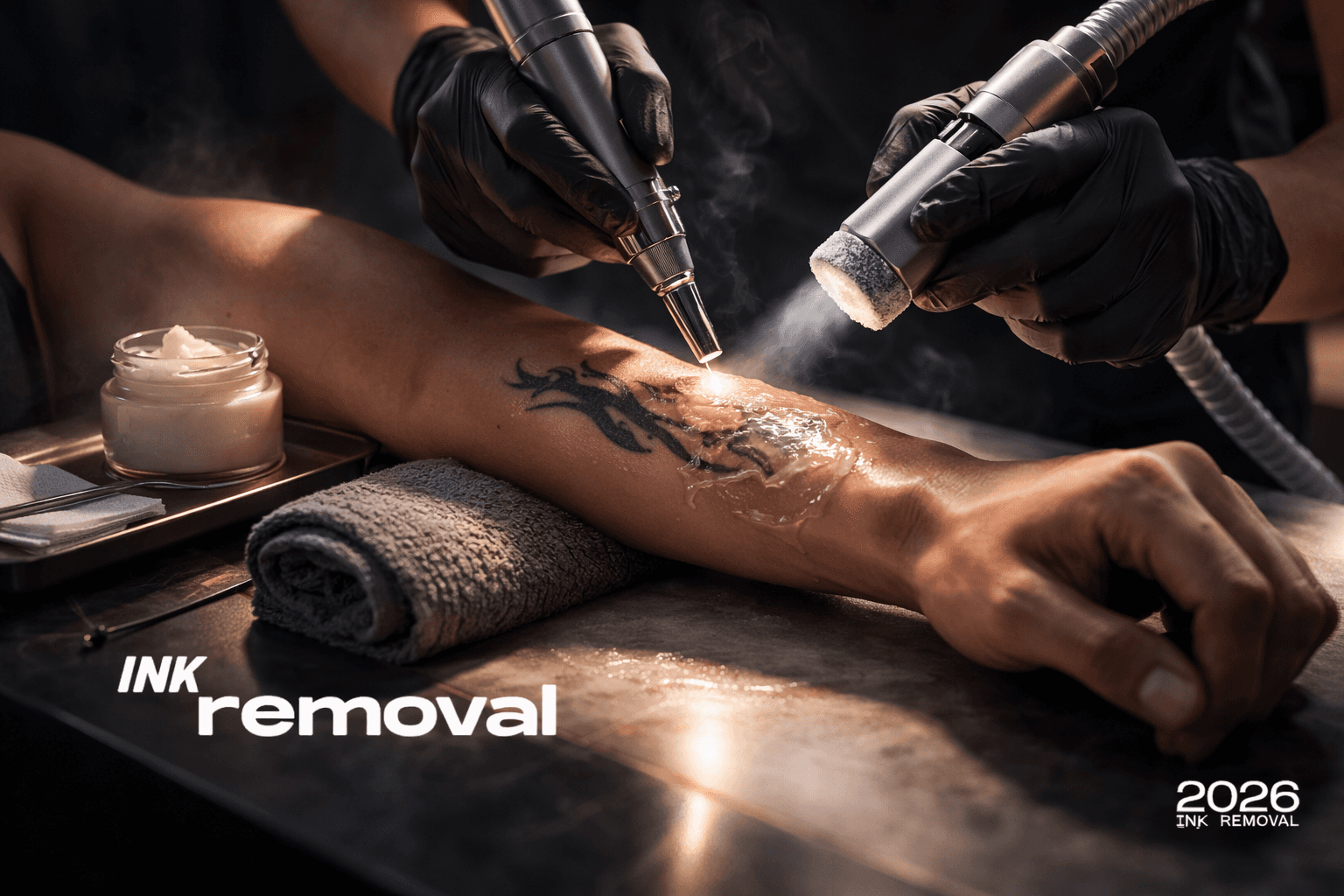
In our last article, we broke down how skin type affects tattoo removal. Now we’re tackling the question people are often too nervous to ask out loud:
How much does it actually hurt?
If you Google it, you’ll get a textbook answer:
“It feels like a rubber band snapping.”
“It’s worse than getting a tattoo.”
“It depends.”
That’s not wrong. But it’s not complete either.
Key takeaways: The reality of tattoo removal pain
Speed is the X-Factor: While the sensation may be more intense than getting a tattoo, it lasts only seconds to minutes. Most people find it more tolerable because of the brevity.
Location Matters Most: Areas with less "padding" (ribs, neck, feet, wrists) are significantly more sensitive than muscular or fatty areas like the arms or thighs.
The "Rubber Band" Myth: It is often described as a snapping sensation, but professional cooling systems (Zimmer Cryo) are now the industry standard to neutralize that heat.
Ink Density vs. Laser Power: Discomfort often stays consistent throughout the journey because as the ink fades (less pain), the laser power is increased (more intensity).
Individual Variables: Hormonal cycles and individual pain thresholds matter more than skin type or tattoo depth when it comes to how the session feels.
To go deeper, we spoke again with:
Bonsai Tattoo Removal - Dallas, Texas
Ink Free Tattoo Removal - Dover, New Hampshire
Tampa Bay Tattoo Removal - Clearwater, Florida
Here’s how their real-world answers compare to the generic internet version.
Tattoo removal pain vs. getting a tattoo: Which is worse?
Tattoo removal is generally more intense than getting a tattoo, but because the sessions are incredibly fast—often lasting less than 60 seconds—most clients find it easier to manage overall.
The textbook answer
Most sources say removal feels like a rubber band snapping against the skin and is often described as more intense than getting a tattoo - but much faster.
What clinics actually see
Ink Free Tattoo Removal says you actually cannot directly compare the two. The sensations are different. They agree removal feels like a rubber band snapping repeatedly - but emphasize that treatments are MUCH faster than getting a tattoo.
Tampa Bay Tattoo Removal shares that most clients describe removal as more intense, but treatments usually last seconds to a few minutes, making it manageable. They note that perception depends on:
Individual pain tolerance
Ink density
Tattoo location
Bonsai Tattoo Removal adds important nuance. They explain that body placement matters significantly. Areas with little muscle or fat - like the lower back, inner wrist, top of the foot, neck, or ribs - tend to feel more intense. Areas with more muscle or fat - such as the arms, legs, chest, or buttocks - are typically easier to tolerate.
The team describes removal as a completely different sensation than getting tattooed. Some clients say it hurts less. Others say slightly more. The major difference is speed. Most sessions last seconds to a minute.
One reaction the team frequently hears during test shots:
“That’s it?”
Many clients later tell them they would have started years earlier if they had known how tolerable it was.
Session-by-session discomfort: Does it get easier?
Not necessarily. While there is less ink for the laser to hit in later sessions, specialists typically increase the laser's power to reach deeper pigments, keeping the sensation relatively consistent.
The textbook answer
Pain decreases over time as the tattoo fades.
What clinics actually see
Ink Free Tattoo Removal says the first few sessions are usually the most intense. As the tattoo fades, it generally becomes easier.
Tampa Bay Tattoo Removal says it varies. While less ink can reduce impact, increased laser energy over time may keep discomfort relatively consistent depending on skin response.
Bonsai Tattoo Removal explains this in more technical detail. Higher laser power levels tend to feel more intense. However, less remaining ink usually means less discomfort. Their approach is to:
Start conservatively when ink is dense
Gradually increase power as the tattoo fades
This often results in a relatively consistent level of discomfort across sessions rather than a dramatic spike or drop.
Sensitive body parts: Where does tattoo removal hurt the most?
The ribs, fingers, neck, feet, and wrists are universally cited as the most painful areas due to the lack of muscle or fat "cushioning" over the bone.
The textbook answer
Yes - thinner skin and areas close to bone are more sensitive.
What clinics actually see
All three clinics independently identify similar high-sensitivity areas:
Ribs
Fingers
Neck
Feet
Wrists
Ankles
Ink Free Tattoo Removal specifically calls the ribs the most painful area in most cases.
Tampa Bay Tattoo Removal explains that areas with thinner skin or less fat tend to be more sensitive than areas like the torso, arms, or calves.
Bonsai Tattoo Removal reinforces this pattern, emphasizing that muscle and fat provide cushioning. Areas with more padding are generally easier to tolerate.
While not statistically representative, it is still notable that all three clinics independently pointed to the same high sensitivity areas.
Pain management and numbing: What actually works?
Active skin-cooling machines (like the Zimmer Cryo) are the industry standard for pain management, often used in combination with topical lidocaine creams.
The textbook answer
Use numbing cream or ice.
What clinics actually use
All three clinics use a Zimmer Cryo cooling machine during treatment.
Ink Free Tattoo Removal uses the cooling device before and during the session. They recommend ice after treatment. They allow numbing cream prior to appointments but note that reactions can occur and cannot be guaranteed.
Tampa Bay Tattoo Removal combines a Zimmer Cryo cooling machine with lidocaine 4 percent or higher applied 45 minutes to 1 hour before treatment. They say the combination is very effective for clients with lower pain tolerance.
Bonsai Tattoo Removal relies on cooling devices, ice packs, and clinic-provided numbing solutions. They report that these significantly reduce discomfort for most clients.
Across clinics, active cooling appears to be the standard - not optional.
Pain factors: Does skin type or tattoo depth matter?
Clinical experience suggests that individual pain tolerance and tattoo location are bigger factors than skin type or how deep the ink was placed.
The textbook answer
Deeper tattoos hurt more. Skin type affects sensitivity.
What clinics actually see
Ink Free Tattoo Removal notes that deeper and denser tattoos can cause more intense discomfort.
Tampa Bay Tattoo Removal says pain tolerance is more individual than skin-type dependent. Ink concentration and location tend to matter more.
Bonsai Tattoo Removal has not observed a consistent correlation between skin type and pain sensitivity. In their experience, pain tolerance varies far more by individual.
They also share two additional real-world observations:
Many women appear to tolerate treatments better than men
Some clients experience increased sensitivity during their menstrual cycle
These are not textbook notes - but they are consistent clinical observations.
So - How bad is it really?
If you combine all three perspectives, here’s the honest answer:
It can feel intense for a few seconds
Location matters
Dense ink matters
Cooling devices significantly help
Most people find it more manageable than they expected
And most importantly:
It is fast.
The fear of pain often lasts longer than the treatment itself.
Once you understand what the process feels like, the next concern many people have is long term - can tattoo removal cause scarring?
——————————
Clinic Spotlight - Ink Free Tattoo Removal
Below is a brief background on one of the clinics featured in this series.
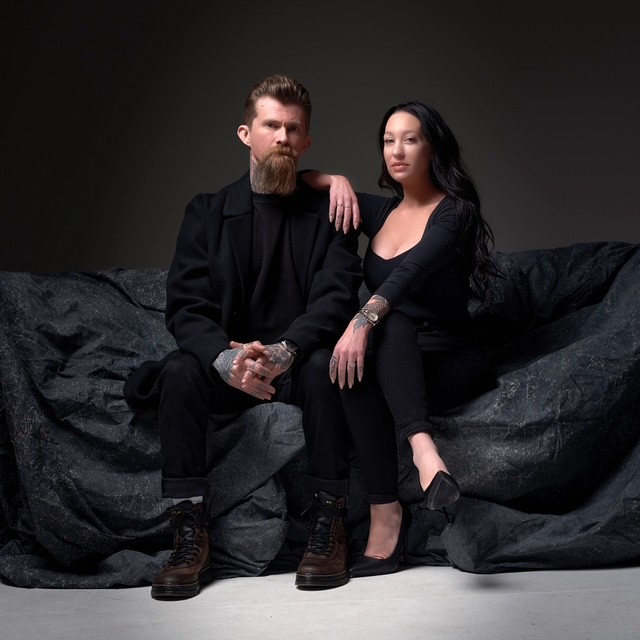
The name Ink Free was chosen for its clarity. The team wanted something straightforward that clearly communicates both the service offered and what the business represents.
Ink Free is a family owned clinic led by Tim and Sarah, who bring a combined 17 years of experience in tattoo removal, tattoo fading, and permanent makeup removal. Their approach reflects that longevity - consistent protocols, cooling during treatment, and clear expectations.
One of the biggest surprises patients mention is speed. Small tattoos can often be treated in under a minute. While removal can feel intense in short bursts, the brief duration makes the experience more manageable than many anticipate.
Ink Removal isn’t a clinic. We’re not here to tell you what will happen to your skin, or what choice you should make. We’re here to translate what people with similar skin types, tattoos, and timelines have actually experienced - and to flag where outcomes tend to vary.
Dec 19, 2025
