Does Tattoo Removal Leave Scars? What Causes Scarring and How to Prevent It
Does tattoo removal leave scars? Learn real risk factors, prevention tips, and how to properly heal your skin.
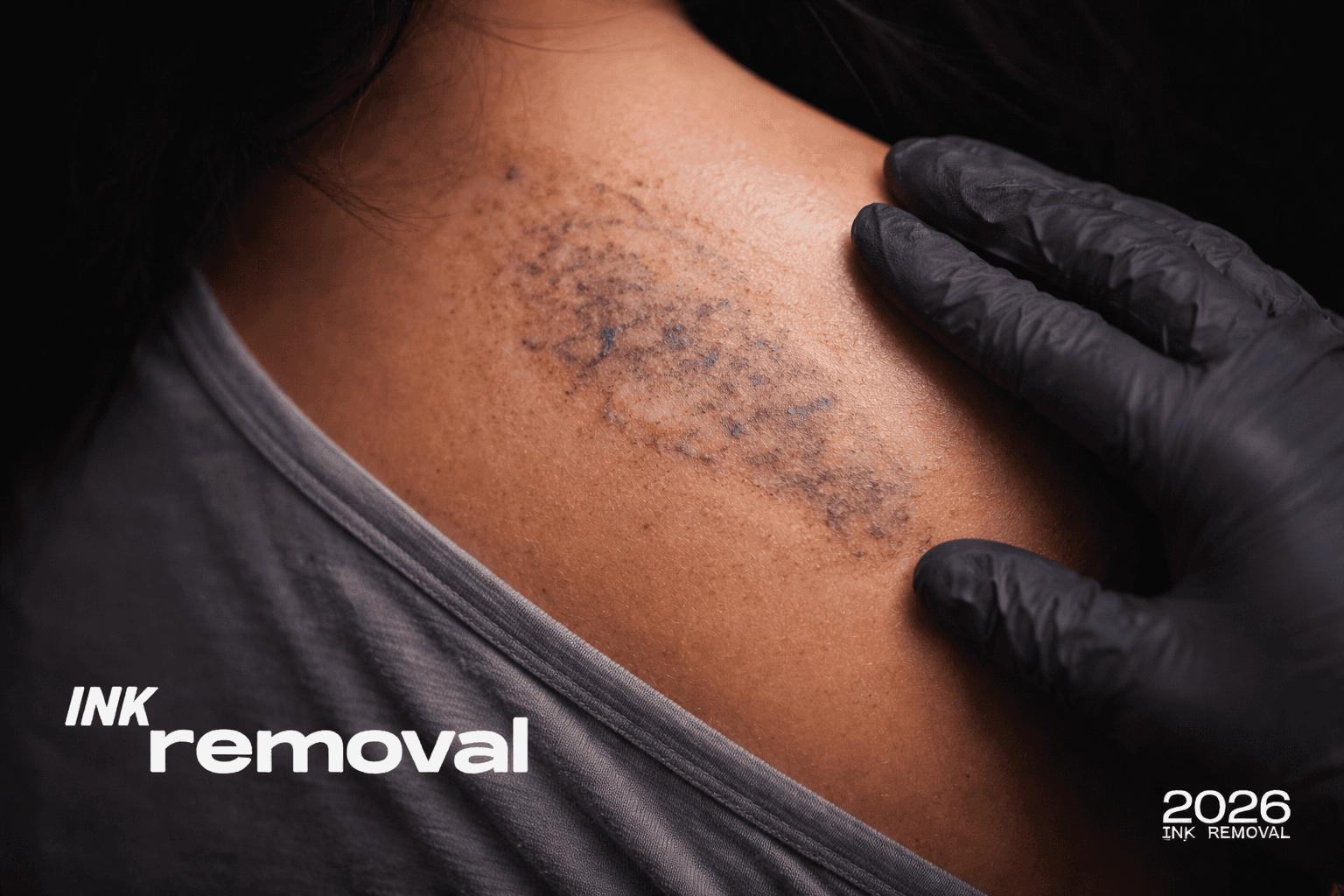
If pain is the most feared part of tattoo removal, scarring is the most misunderstood.
Search online and you’ll see two extreme answers:
“Laser removal causes scars.”
“Scarring never happens.”
Neither is fully accurate.
Key takeaways: Tattoo removal and scarring risks
The "Hidden" Scar: Most scarring seen during removal was actually caused by the original tattoo needle, not the laser. The fading ink simply reveals the pre-existing skin texture.
Aftercare is the Variable: The laser rarely causes scars, but human behavior (picking scabs, popping blisters, or sun exposure) is the leading cause of permanent marks.
Wait to Heal: Treating the skin too soon is a major risk factor. Professionals like Bonsai will postpone a session if the skin isn't 100% recovered—restraint is a safety feature.
Laser as Therapy: Surprisingly, some removal lasers can actually improve existing scar tissue by stimulating collagen remodeling, potentially leaving the skin smoother than when you started.
Protocol is King: Scarring is extremely rare when FDA-regulated lasers are used by certified specialists who follow conservative energy settings.
To get clarity, we asked:
Tampa Bay Tattoo Removal - Clearwater, Florida
Bonsai Tattoo Removal - Dallas, Texas
Ink Free Tattoo Removal - Dover, New Hampshire
Here’s what actually increases risk - and what doesn’t.
Laser tattoo removal scarring: Is it a myth or a real risk?
True scarring from properly performed laser tattoo removal is rare; most "removal scars" are actually pre-existing texture changes caused by the original tattoo artist that only become visible as the ink fades.
Tampa Bay Tattoo Removal explains that when treatments are done correctly and within protocol, scarring is uncommon. Most scarring clients notice was caused during the original tattoo application - not during removal. They emphasize the importance of choosing a reputable clinic that uses FDA regulated laser technology and proper cooling operated by a trained, certified laser specialist.
Ink Free Tattoo Removal agrees. In their experience, scarring is typically from when the tattoo was applied. However, they add that poor aftercare during removal can also create scarring.
Bonsai Tattoo Removal says scarring is possible - but extremely rare in their practice. The team attributes this to conservative protocols and constant monitoring. At each visit, they evaluate how the skin healed after the previous session before deciding how to proceed.
If the skin is not fully ready - even if several weeks have passed - they will reschedule rather than treat too soon.
That restraint matters.
Aggressive treatment is one of the biggest risk factors for permanent damage.
Scarring vs. normal healing: How can you tell the difference?
Normal healing involves temporary redness, swelling, and blisters that resolve in two weeks, whereas true scarring is persistent, firm, and either raised or indented.
Normal post treatment effects often include:
Redness
Swelling
Itching
Blistering
Temporary texture changes
Ink Free Tattoo Removal notes these effects typically resolve within the first couple of weeks.
Tampa Bay Tattoo Removal adds that normal healing improves over time. Scarring, by contrast, is usually:
Firm
Raised or indented
Persistent
Not improving
They describe true scars as structural changes in the skin - not temporary inflammation.
Ink Free also points out that scarring from poor aftercare can appear as thick, pinkish patches on the skin.
The key difference is time and progression.
If it is improving - it is likely healing.
If it remains raised or indented long term - that is more consistent with scarring.
Tattoo removal risk factors: What actually causes skin damage?
The primary causes of scarring are aggressive laser settings, treating the skin too frequently, and—most importantly—picking at blisters or exposing the area to the sun.
Across all three clinics, one theme stands out:
Aftercare.
Ink Free Tattoo Removal is direct - poor aftercare, without a doubt, increases risk. Picking, popping, or touching blisters and scabs can absolutely cause scarring. Sun exposure and improper post treatment care are also major contributors.
Tampa Bay Tattoo Removal echoes this and adds additional risk factors:
Aggressive laser settings beyond protocol
Treating too frequently between sessions
UV exposure
Picking or popping blisters
Bonsai Tattoo Removal emphasizes avoiding prolonged sun exposure - especially during the first three to five days - keeping the area clean, and maintaining proper moisture. They believe appropriate aftercare products can meaningfully improve healing outcomes.
Notice what is not emphasized:
Skin type.
None of the clinics identified skin tone alone as a primary driver of scarring when protocols are followed correctly.
Removing tattoos with existing scars: Can it be done?
It is possible to remove ink from scarred skin, and in many cases, the laser process actually helps flatten and improve the appearance of the original scar tissue.
Ink Free Tattoo Removal explains that lasers target ink - not scar tissue. Even when the ink is removed, individuals may still see and feel the texture of the original scar. Removing tattoos with scar tissue present can be more challenging.
Tampa Bay Tattoo Removal agrees that while lasers cannot remove scar tissue itself, ink within scarred areas can often still be lightened. Results may simply be less predictable.
Bonsai Tattoo Removal expands on this with more technical detail.
The team explains that certain laser handpieces can help improve already scarred or raised tattoos. These devices function similarly to microneedling by delivering multiple micro laser beams that create small channels in the skin. This process can:
Break up scar tissue
Stimulate collagen production
Gradually flatten raised areas
He also notes that even standard laser tattoo removal can positively influence scar tissue by stimulating the skin’s natural healing response. In many cases, they have seen scars improve significantly by the time the tattoo is fully removed.
That is an important distinction:
Laser removal is not designed as scar treatment - but in some cases, skin texture can improve as ink clears and collagen remodeling occurs.
So - Should you be worried about scarring?
If treatments are performed:
Within protocol
With appropriate spacing
By a trained specialist
With strict aftercare followed
The risk appears low based on consistent clinic experience across three different states and patient populations.
Most visible scarring people notice during removal was already there.
The bigger risks are:
Overly aggressive treatment
Ignoring aftercare
Sun exposure
Picking at healing skin
Tattoo removal is a controlled medical procedure.
When it is treated that way, the skin typically responds accordingly.
And once you understand the real risk of scarring, the final piece becomes clear - what you do after each session determines your results.
——————————
Clinic Spotlight - Bonsai Tattoo Removal
Below is a brief background on one of the clinics featured in this series.

The name Bonsai Tattoo Removal has a personal origin. Daniel, the founder, grew up being called “Daniel-san” after the movie The Karate Kid. Years later, he named his dog Bonsai in honor of Mr. Miyagi. When launching his clinic - shortly after his dog passed away - he chose the name Bonsai Tattoo Removal as a tribute.
Daniel has personally been performing tattoo removal for five years. Across his locations, each office completes approximately 250 to 300 appointments per month - volume that has given him extensive hands on experience with a wide range of tattoo types and skin responses.
Patients are often surprised by two things:
How many sessions removal actually requires
How many people are actively going through the process each month
Daniel notes that many clients initially underestimate the number of treatments needed, especially when they have not researched the process beforehand.
Ink Removal isn’t a clinic. We’re not here to tell you what will happen to your skin, or what choice you should make. We’re here to translate what people with similar skin types, tattoos, and timelines have actually experienced - and to flag where outcomes tend to vary.
Jan 20, 2026
