Tattoo Removal Aftercare: Healing Timeline, Do’s & Dont's, and What Affects Results
Tattoo removal aftercare explained: healing timelines, common mistakes, and when to book your next session.
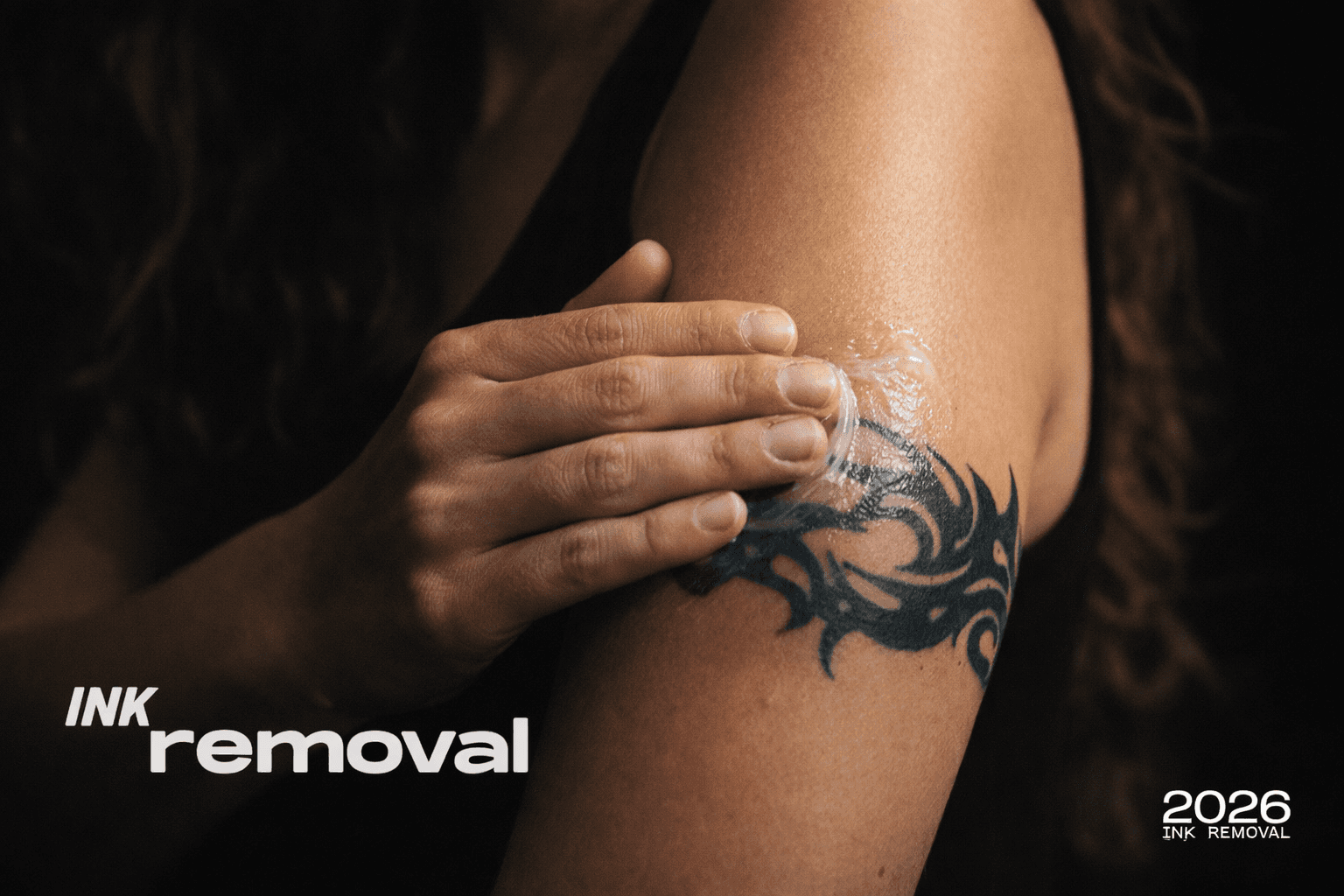
If skin type influences treatment
And pain influences comfort
And scarring depends on protocol
Aftercare determines outcome.
Key takeaways: Maximizing your removal results
The 72-Hour Rule: The first three days are critical. Keep the area cool, clean, and covered in a simple occlusive like Aquaphor to prevent infection.
Sun is the Enemy: UV exposure doesn't just burn the skin; it confuses the healing process and can lead to permanent pigment changes. High SPF is non-negotiable.
The "Smoker’s Penalty": Clinical observation shows that cigarette smoking significantly slows down fading because the immune system is too busy clearing toxins to focus on ink particles.
Movement vs. Healing: While light exercise is encouraged to boost circulation (which helps flush ink), avoid swimming or heavy friction for at least 3–7 days to prevent infection.
Hands Off the Blisters: Blistering is a common, normal response to dense ink. Popping them manually is the #1 cause of avoidable scarring.
Every clinic we spoke to agrees on one thing:
What you do between sessions matters just as much as what happens during them.
We asked:
Ink Free Tattoo Removal - Dover, New Hampshire
Tampa Bay Tattoo Removal - Clearwater, Florida
Bonsai Tattoo Removal - Dallas, Texas
Here’s where their guidance overlaps - and where it goes deeper than standard instructions.
Immediate tattoo removal aftercare: What do I do first?
The first 72 hours should focus exclusively on reducing heat and protecting the skin barrier using cold packs and simple, fragrance-free ointments like Aquaphor or Vaseline.
Across clinics, the immediate priorities are consistent:
Reduce heat
Keep the area clean
Protect the skin barrier
Ink Free Tattoo Removal recommends applying ice or a cold pack to reduce heat and inflammation, keeping the area clean, and applying a thin layer of Aquaphor to reduce infection risk.
Tampa Bay Tattoo Removal advises keeping the area clean, cool, and protected. They recommend Aquaphor or Vaseline twice daily for the first three days, followed by fragrance free lotion and strict sun protection.
Bonsai Tattoo Removal recommends a specialized aftercare cream and keeping the area clean and moisturized to support healing.
The shared theme:
Simple products. Clean environment. No overcomplicating it.
Sun exposure and tattoo removal: Why is it so dangerous?
UV exposure is the most common aftercare mistake; it increases skin sensitivity and can cause the laser to react unpredictably with your natural pigment, often stalling your fading progress.
Ink Free Tattoo Removal advises avoiding sun exposure throughout the entire removal process. They recommend high SPF sunblock because UV exposure can:
Cause unwanted skin changes
Increase sensitivity
Interfere with healing
Tampa Bay Tattoo Removal recommends avoiding sun exposure until the skin is fully healed, typically several weeks. They also note that skin remains UV sensitive throughout the course of removal.
Bonsai Tattoo Removal advises avoiding sun exposure for several days after treatment and stresses that proper protection supports optimal fading.
If fading seems stalled, sun exposure is often an overlooked reason.
Exercise and swimming after laser sessions: When is it safe?
You should avoid swimming and high-intensity workouts for 72 hours to prevent infection and irritation, but light movement after that can actually help your body flush away shattered ink.
Online advice often says “rest.”
Clinics are more nuanced.
Ink Free Tattoo Removal recommends:
No swimming, baths, or hot tubs for one week
Waiting 48 hours before light workouts
Waiting one full week before heavy lifting or high intensity workouts
Tampa Bay Tattoo Removal advises avoiding strenuous workouts and swimming for at least 72 hours, or longer if irritation persists. They also caution against friction to the treated area.
Bonsai Tattoo Removal takes a slightly different approach. While they discourage swimming for three to five days due to infection risk, the team encourages exercise once appropriate. They explain that improved circulation and immune function help the body flush out shattered ink particles.
The team also highlights lifestyle factors that many clinics do not mention:
Adequate sleep
Hydration
Low stress
Healthy diet
All support more efficient fading.
Aftercare is not just topical. It is systemic.
Slow tattoo removal results: What lifestyle factors stop fading?
Most people assume fading is entirely laser dependent.
Clinics disagree.
Ink Free Tattoo Removal points to:
Popping blisters
Picking scabs
Sun exposure
Tampa Bay Tattoo Removal adds:
Overexertion too soon
Skipping moisturizer
Not following spacing recommendations between sessions
Bonsai Tattoo Removal introduces one of the strongest variables:
Smoking cigarettes.
They explain that the body prioritizes clearing toxins from smoking rather than removing shattered ink particles. In their experience, heavy cigarette smokers often see significantly slower fading.
The team notes that marijuana smokers do not appear to experience the same delay.
They also cautions against scheduling sessions too close together. Treating too frequently does not speed up removal. It can reduce effectiveness because the body has not had adequate time to clear fragmented ink.
Spacing is strategic.
More is not better.
Blisters after tattoo removal: Should I be worried?
Blistering is a normal biological response, especially with dense black or colored inks, but you must allow them to drain and heal naturally to avoid permanent scarring.
All three clinics confirm:
Blistering can be normal.
Ink Free Tattoo Removal says blistering is common, especially with colored ink and dense black ink. They stress:
Do not pop them
Keep the area clean
Apply antibiotic ointment
Protect the skin
Tampa Bay Tattoo Removal advises leaving blisters intact whenever possible. If they open, basic wound care and protective ointment should be used until fully healed.
Bonsai Tattoo Removal explains that blistering depends on wavelength and individual skin response. It is not required for successful treatment. For small blisters, they advise leaving them intact and keeping the area moisturized.
For larger blisters that interfere with movement, they may advise carefully draining them using sterile technique, followed by protection and continued moisture.
They also note that scabbing is less common. Even when scabs appear ready to come off, they advise leaving them alone to avoid complications.
The consistent message:
Interfering with the skin slows healing and increases risk.
Which products help? And which should be avoided?
Across clinics, recommended products are simple:
Helpful:
Aquaphor
Vaseline
Gentle fragrance free moisturizers
Antibiotic ointment when needed
High SPF sunblock
Avoid:
Scented lotions
Exfoliants
Body scrubs
Products with active ingredients during healing
Over treating the area often causes more irritation than benefit.
Please note: The FDA has not reviewed these products and is not aware of any evidence that they are safe or effective for tattoo removal. These products may cause skin rashes, burns, or scars. See the full FDA Review on tattoo removal here.
The bigger picture: aftercare is part of the treatment
If you read this series in order, you can see the pattern:
Laser removal is not just about:
Skin type
Pain tolerance
Equipment
It is about partnership.
Clinics control:
Laser settings
Cooling
Spacing
Protocol
You control:
Sun exposure
Picking or not picking
Hydration
Smoking
Session timing
Overall health
The laser breaks the ink.
Your body removes it.
And aftercare determines how efficiently that happens.
Tattoo removal is not just a procedure - it’s a process, and every step along the way plays a role in your final result.
——————————
Product Spotlight - Bonsai Tattoo Removal Tallow Honey Balm
One of the clinics we interviewed developed its own aftercare product. Below is a brief overview of what it is and why they created it.
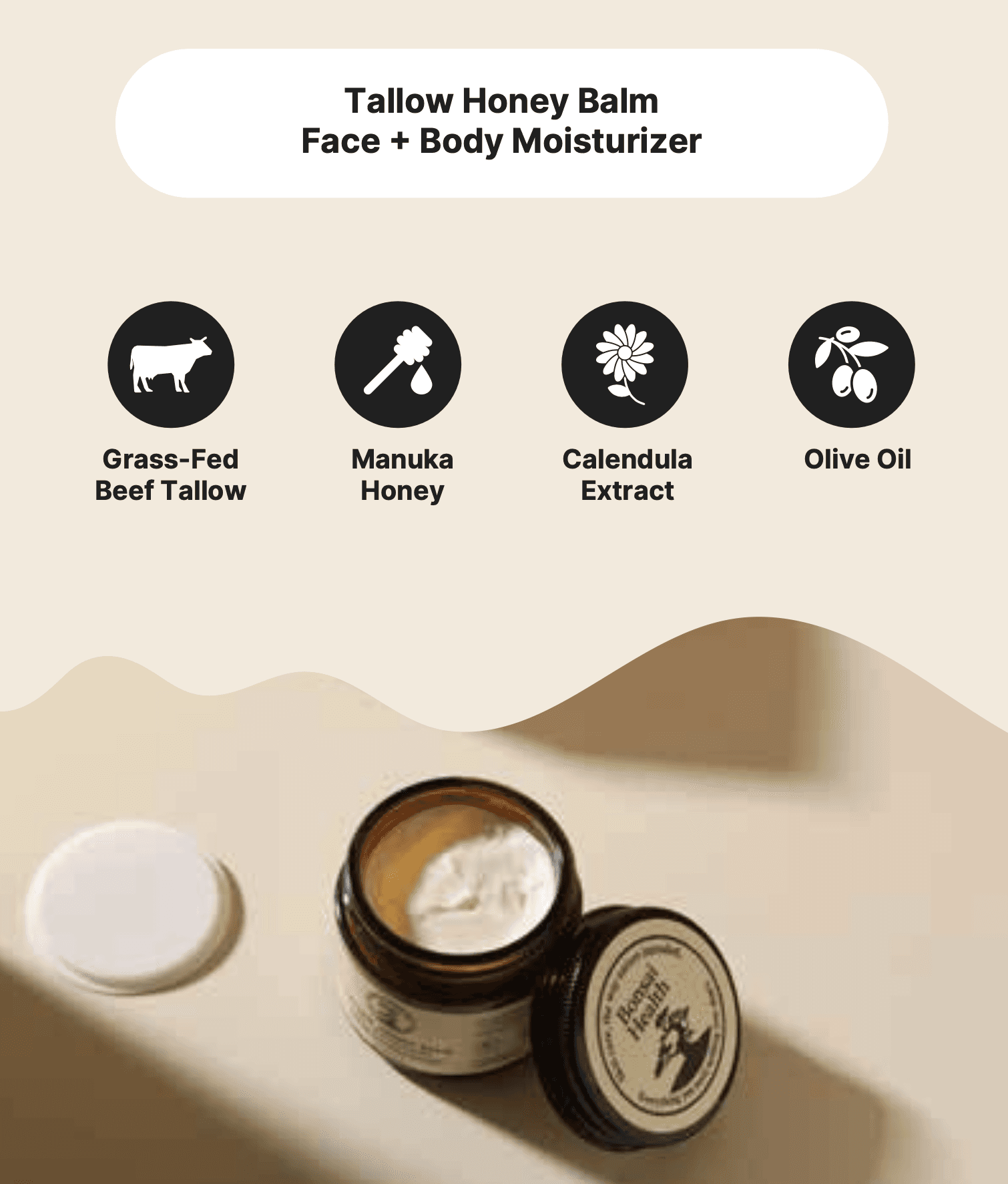
In addition to in clinic treatment, Bonsai Tattoo Removal developed its own aftercare product called Tallow Honey Balm, a face and body moisturizer created specifically to support post treatment healing.
Bonsai Tattoo Removal explains that the goal was simple: find something better than Aquaphor - less synthetic, less greasy, and more aligned with the level of excellence their clinic aims to maintain. When they could not find a product on the market that met that standard, they developed one.
Tallow Honey Balm contains four ingredients:
Grass fed beef tallow
Manuka honey
Calendula extract
Olive oil
Bonsai Tattoo Removal describes these as nature’s four essentials for skin health.
Grass fed beef tallow - for skin repair
Rich in vitamins A, D, E, and K, grass fed tallow closely mimics the skin’s natural oils. Because human sebum is primarily composed of saturated and monounsaturated fats, tallow shares a nearly identical fatty acid profile. This allows it to absorb more readily rather than sitting on the surface.
Manuka honey - for moisture
Naturally antibacterial and enzyme rich, Manuka honey helps draw in moisture, calm irritation, and support the skin’s healing process.
Virgin olive oil - for hydration
Packed with antioxidants and essential fatty acids, olive oil hydrates, softens, and reinforces the skin barrier.
Calendula extract - for renewal
Known for soothing and anti inflammatory properties, calendula helps reduce redness and support gentle skin recovery.
Daniel notes that many conventional moisturizers rely on synthetic fillers, preservatives, and seed oils that can feel greasy or occlusive. As skin ages and produces fewer natural oils, these products may not integrate as effectively.
Tallow Honey Balm was designed as a minimalist alternative - no fillers, no fragrances, no hormone disruptors - just four biocompatible ingredients intended to work with the skin’s natural biology.
In the context of tattoo removal, the objective is not just moisture, but balanced barrier support. Proper aftercare helps reduce unnecessary irritation and may support more even healing between sessions.
As discussed throughout this series, the laser initiates the process.
Healing determines the outcome.
Ink Removal isn’t a clinic. We’re not here to tell you what will happen to your skin, or what choice you should make. We’re here to translate what people with similar skin types, tattoos, and timelines have actually experienced - and to flag where outcomes tend to vary.
Feb 27, 2026
